+
For access to your online account please contact your personal account manager, alternatively email team@regencyfx.com.
.png)


For access to your online account please contact your personal account manager, alternatively email team@regencyfx.com.
Buying a property in France is an exciting milestone. Whether you're purchasing a holiday home in Provence, a farmhouse in the Dordogne or a city apartment in Paris, the process feels manageable until the currency exchange comes into play.
Most UK buyers focus on the property price, legal fees and notary costs. What many overlook is that the exchange rate between pounds and euros can quietly add thousands to the final bill or, if handled well, save you a significant amount.
In this guide, we walk through the full buyer journey and explain exactly where the hidden currency costs appear, what they mean in practice and how to protect yourself at each stage.
If you are also looking at the other side of the transaction, our guide to selling your property in France covers the currency considerations for sellers.
When you buy a property in France, every cost is priced in euros. Your deposit, your notary fees and your final completion payment all need to be paid in euros. As a UK buyer paying in pounds, the rate at which your money is converted has a direct impact on how much you actually pay.
A 2% shift in the GBP/EUR exchange rate on a €400,000 purchase doesn't sound dramatic. But in practice, that movement alone could cost you over £7,000 more than you budgeted for before a single fee is paid.
The problem is that most buyers don't think about exchange rates until they're deep into the process. By then, options are limited and the costs are harder to control.
👉 Watch our short explainer video here: The hidden cost of buying property in France
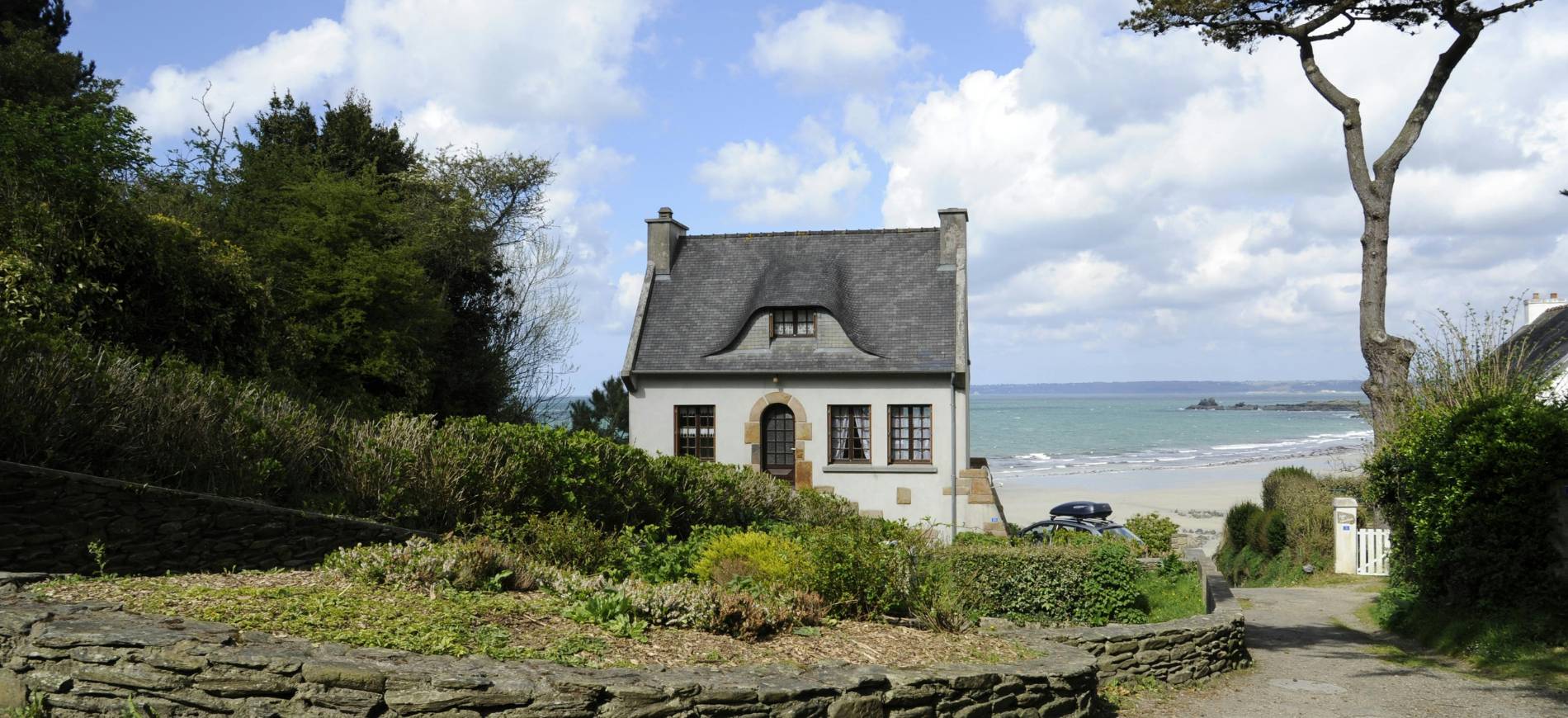
The moment you make an offer on a French property, your budget is effectively set in euros. But your money is still sitting in pounds.
Between the day you agree a price and the day you complete, the GBP/EUR rate will move. It might move in your favour. It very often doesn't.
If you agree to buy a property for €350,000 when GBP/EUR is 1.17, you need roughly £299,000. If by completion the rate has moved to 1.13, that same €350,000 now costs you around £310,000. That's over £11,000 more for exactly the same property.
This is one of the most common and avoidable surprises UK buyers face.
A forward contract allows you to lock in the current exchange rate for up to 12 months with just a 10% deposit. This means you know exactly what your euros will cost you in pounds from the moment you agree the purchase regardless of how the market moves before completion.

In France, the buying process typically begins with signing a compromis de vente, a preliminary contract, and paying a deposit of around 10% of the purchase price.
This payment is usually due within 10 to 14 days of the compromis being signed. For a €350,000 property, that's €35,000 you'll need to convert and transfer quickly.
If you use your high street bank for this transfer, you're likely to encounter an exchange rate margin of 2% to 4% above the real mid-market rate. On a €35,000 deposit, that could mean paying £600 to £1,200 more than necessary just on the exchange rate alone before any transfer fees are added.
Many buyers don't notice because the rate is built into the conversion rather than shown as a separate line item.
Use a specialist currency provider for this transfer. The rate will be considerably closer to the real market rate and with us, we do not charge any transfer fees. Even at this early stage, the saving is meaningful and you'll have a clearer, more transparent picture of exactly what you're paying.

French property purchases involve notary fees (frais de notaire) that typically run between 7% and 8% of the purchase price for older properties or around 2% to 3% for new builds. These are paid in euros on or before completion.
On a €350,000 older property, notary fees alone could come to €25,000 or more.
Buyers often convert their notary fees separately from the main purchase price, sometimes at the last minute. This is where exchange rate margins can bite again. A rushed conversion through a bank particularly close to a notary deadline rarely gives you the best rate.
Plan the timing of all your euro conversions together, not separately. A specialist account manager can help you see the total euro requirement across the deposit, fees and final payment and structure your conversions to reduce overall cost.

The completion of a French property purchase takes place at the notary's office with the signing of the acte de vente. The full balance of the purchase price, minus your deposit, must be available in euros and cleared in the notary's account before or on the signing day.
This is the largest single payment in the process and the one where exchange rate costs matter most.
The two main risks here are rate movement and timing.
Rate movement we've already covered. The difference between your agreed purchase price in euros and what it actually costs in pounds can shift significantly between offer and completion.
Timing is equally important. French notaries will not complete a transaction if funds have not cleared. If your bank transfer is delayed due to processing times, compliance checks or SWIFT routing, it can delay your signing date and sometimes at a financial cost.
If you haven't already locked in a forward contract, completing through a specialist currency provider gives you access to faster transfer times and a dedicated person overseeing the payment. Unlike a bank, your account manager is focused on your transaction and can confirm receipt at the notary's end before the signing date arrives.
Here is a realistic example for a UK buyer purchasing a property in France for €400,000:
Buying property in France involves multiple parties. Estate agents, notaries and lawyers are all working to their own timelines. The currency side of the transaction needs someone who understands that pressure.
At Regency FX, every client is assigned a free dedicated account manager who:
This is the part of the process that apps and banks simply cannot replicate. When hundreds of thousands of pounds are involved and a legal deadline is approaching, having a real expert by your side makes an enormous difference.

When should I start thinking about currency exchange? As early as possible, ideally before you make an offer. Once you have a figure in mind, a specialist can help you understand what it costs in pounds today and what tools are available to protect that cost.
Can I lock in an exchange rate before I've found a property? Yes. A forward contract requires you to specify an amount and a settlement date but you can use it to protect a budget range while you're still searching.
What is the best way to pay a French notary? Most notaries in France accept international bank transfers directly. Unlike in Spain where banker's drafts are still widely used, they are less common in the French system. The key is ensuring funds arrive in cleared euros before the signing date and your account manager can help coordinate this.
How long do transfers to France take? SEPA transfers within the eurozone are typically same-day or next-day. International transfers from the UK settle quickly when processed through a specialist provider. You can read more about how long international transfers take in our dedicated guide.
Is my money safe when using Regency FX? Yes. All funds are held in client-segregated accounts in line with FCA guidelines. You can read more about the safety of your funds on our dedicated page. Your money is kept completely separate from company funds at every stage of the transfer.
How much could I save compared to my bank? On a €400,000 purchase, using a specialist rather than a high street bank can save several thousand pounds in exchange rate costs alone. The exact saving depends on the rate at the time but the difference is consistently significant on large transactions.
French property transactions involve multiple payments, strict legal deadlines and significant sums of money. Every stage of the process from the initial deposit to the final completion involves a currency conversion that can either cost you or save you money.
Specialist currency providers exist precisely for transactions like these. We run a leaner operation than the banks, which means we can offer exchange rates much closer to the real market rate and pass those savings directly to you.
Whether you are at the early stages of searching or approaching a completion date, it is worth getting in touch. A free quote costs nothing and the saving on a typical French property purchase is rarely small.
Get your free quote today and see how much more of your money you could keep.
© RegencyFX. Unauthorised copying or re-wording of this blog content is prohibited. Any unauthorised copying or re-wording will constitute an infringement of copyright. The copyright of this content is owned by Regency FX Ltd.


